

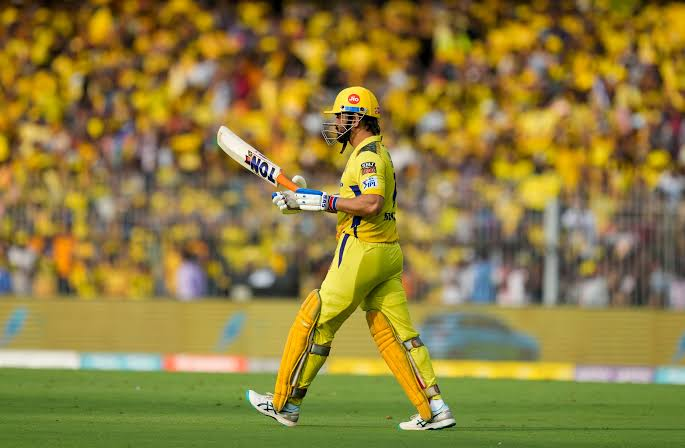
MS Dhoni’s leadership is often described through trophies and famous finishes, but those outcomes explain only part of his influence. His value as a captain came from a repeatable process: he observed matches closely, accepted uncertainty, gave players defined responsibilities, and avoided transferring his own pressure to the team. In situations where one decision could change a match, this approach helped players concentrate on execution rather than consequences.
Cricket contains periods when a captain must choose without knowing whether the result will justify the decision. The psychology resembles other environments based on probability and rapid outcomes, including live casino lightning roulette, where uncertainty remains part of every decision. Dhoni’s strength was not predicting every outcome. It was understanding which variables he could influence and remaining committed to a decision once it had been made.
Calmness as a Leadership Tool
Dhoni’s composure was not simply a personality trait. It had a practical function.
Cricket captains constantly communicate information through body language. A frustrated reaction after a boundary can tell a bowler that the plan has failed. Frequent field changes can indicate uncertainty. Public criticism can make a player more concerned about mistakes than execution.
Dhoni generally reduced these signals.
When a bowler conceded runs, he often allowed the player another opportunity to execute the plan. When a fielder made an error, the response was usually controlled. This helped separate a poor delivery or missed chance from the next action.
Such behavior mattered most during close matches. Pressure spreads through teams, and the captain can either amplify or contain it. Dhoni often acted as a stabilizing point.
Why Players Were Given Long-Term Trust
One of the foundations of Dhoni’s leadership was his willingness to support players beyond individual failures.
A captain cannot create confidence merely by telling someone to be confident. Confidence develops when players understand that one mistake will not automatically remove their role.
Dhoni often gave players repeated opportunities when he believed their skills matched the team’s requirements. That created accountability because trust worked in both directions.
The player received security, but that security came with responsibility. If Dhoni gave a bowler a difficult over or promoted a batter, the player understood that the captain expected a specific contribution.
This approach also helped define roles. Instead of asking every player to solve every problem, Dhoni tried to identify situations in which particular skills were most useful.
Reading Matches Rather Than Following Scripts
Dhoni’s captaincy was notable for decisions that sometimes appeared unconventional when they were made.
His tactical method relied heavily on observing conditions during the match. Pitch behavior, a batter’s movements, the pace of the outfield, bowling rhythm, and previous deliveries could influence his choices.
This meant plans remained adjustable.
A bowler who was originally expected to operate during one phase could be saved for another. Field placements could respond to a batter’s preferred scoring areas. Dhoni was also willing to use slower bowlers when conventional tactics suggested pace.
The important point was that these decisions were usually connected to specific match information. They were calculated interventions rather than random experiments.
The 2007 Final and the Joginder Sharma Decision
One of the clearest examples came in the final of the 2007 T20 World Cup against Pakistan.
With Pakistan needing 13 runs from the final over, Dhoni gave the ball to Joginder Sharma. The decision carried risk because more established bowling options existed within the team.
After a wide and a six, the pressure increased. Yet the plan survived long enough for Sharma to dismiss Misbah-ul-Haq, securing the title for India.
The episode became important to Dhoni’s leadership reputation because it illustrated his willingness to give responsibility to a player without allowing status to determine every decision.
For teammates, that created a powerful message: decisive moments were not reserved only for the biggest names.
The 2011 World Cup Final and Personal Responsibility
Dhoni demonstrated another side of leadership during the 2011 ODI World Cup final against Sri Lanka.
India lost early wickets while chasing 275. Rather than following the expected batting order, Dhoni promoted himself ahead of Yuvraj Singh.
The decision had tactical logic. Dhoni had experience against Muttiah Muralitharan and could provide a right-handed batting option alongside Gautam Gambhir.
But promotion also meant accepting responsibility personally. If the move failed, criticism would focus on the captain.
Dhoni scored 91 not out and completed the chase alongside Yuvraj after building the central partnership with Gambhir.
The innings reinforced an important element of his authority: he did not only distribute pressure. At times, he deliberately took more of it himself.
Wicketkeeping Gave Dhoni a Tactical Advantage
Dhoni’s position behind the stumps also shaped his captaincy.
A wicketkeeper has a close view of the bowler’s release, pitch response, batter’s movement, and changes in pace or spin. Dhoni could process this information while controlling field placements and communicating with bowlers.
This perspective was particularly useful when working with spinners. Small changes in a batter’s position could influence the next delivery or field adjustment.
His wicketkeeping also allowed immediate tactical communication. Rather than sending instructions from a distant fielding position, Dhoni could speak directly to bowlers between deliveries.
The result was a leadership model built around continuous observation.
Why Trust Matters in Decisive Moments
Players trusted Dhoni because his decisions were supported by behavior over time.
He gave players opportunities after failure, protected them from unnecessary pressure, accepted responsibility for major decisions, and maintained similar emotional signals whether India was controlling a match or losing momentum.
Consistency made his unpredictability tactical rather than personal. A player might not know exactly what Dhoni would do next, but could understand why the captain was making the decision.
That distinction is central to leadership. Trust does not require every decision to succeed. It requires players to believe that decisions have a purpose and that failure will be evaluated within context.
A Leadership Legacy Beyond Trophies
Dhoni’s record includes major international titles, but his leadership legacy cannot be reduced to trophies.
His captaincy demonstrated how emotional control, role clarity, observation, and delegated responsibility can influence performance under pressure.
He rarely attempted to remove uncertainty from cricket because that was impossible. Instead, he created conditions in which players could operate effectively despite it.
That may explain why teammates continued to trust him during decisive overs, difficult chases, and tournament finals. Dhoni did not promise that every plan would work. His leadership gave players something more useful: confidence that when a difficult moment arrived, there would be a plan, a defined responsibility, and enough trust to execute it.
