

Introduction
Education is the cornerstone of human development and the driving force behind the growth of civilizations. It has the power to transform individuals, shape societies, and build nations. From ancient times to the modern era, education has been regarded as the key to unlocking human potential and fostering progress. What is education? In simple terms, it is the process of gaining knowledge, skills, values, and attitudes that enable a person to understand the world and navigate life effectively. However, education is not just limited to textbooks and classrooms; it is a lifelong journey of learning, exploring, and applying wisdom in real-life situations.
In this article, we will dive deeper into the definition of education, exploring both traditional and modern perspectives on what it truly means. We will also discuss important education topics that shape learning today, such as formal and informal methods, the role of technology, and the social impact of education. Finally, we will examine why education is essential for personal growth, career development, and the overall well-being of society. Whether you are a student, teacher, parent, or simply curious about the subject, understanding education is the first step toward appreciating its true value in our lives.
Definition of Education
The definition of education can vary depending on cultural, historical, and academic perspectives, but at its heart, education is the process of facilitating learning — a journey through which individuals acquire knowledge, develop skills, and build values that prepare them to participate effectively in society. According to the simplest definition, education is the act of receiving or giving systematic instruction, especially at a school or university. However, this definition captures only a part of its vast meaning. Education extends far beyond formal teaching; it includes the experiences, lessons, and influences that shape a person’s mind, character, and outlook on life.
From an academic standpoint, education involves structured learning under a curriculum designed to equip learners with intellectual tools for problem-solving, critical thinking, and innovation. It includes a wide range of disciplines, from mathematics and science to literature, arts, and moral studies. On the other hand, in a broader and more philosophical sense, education is about nurturing the whole person — developing emotional intelligence, ethical reasoning, and the ability to interact harmoniously with others.
Philosophers and scholars have offered their own definitions over the centuries. Aristotle viewed education as the process of creating sound mind in a sound body, while Nelson Mandela famously described it as the most powerful weapon we can use to change the world. In modern times, UNESCO defines education as a fundamental human right and the foundation for sustainable development, peace, and equality.
Education can also be understood in three main forms: formal education (structured and institutionalized learning), informal education (life experiences and self-learning), and non-formal education (organized learning outside traditional institutions, such as workshops or training programs). Together, these forms ensure that learning is a continuous and evolving process, not limited to any single stage of life.
In essence, the definition of education goes beyond memorizing facts or passing exams. It is the cultivation of knowledge, skills, attitudes, and values that empower individuals to think independently, act responsibly, and contribute positively to the world around them. It shapes not only careers but also character, making it one of the most vital pillars of human existence.
Types of Education
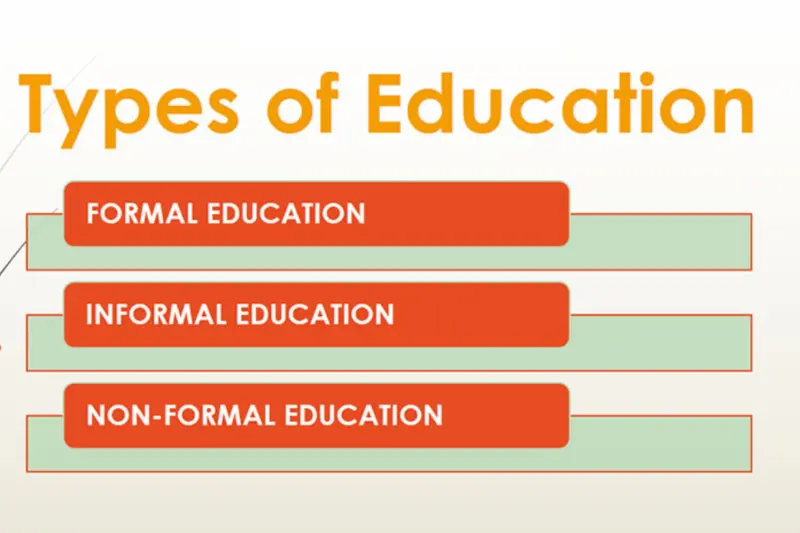
Education takes many forms, each serving a unique purpose in shaping an individual’s knowledge, skills, and values. While the definition of education explains what it is in general, understanding the types of education helps us see how learning happens in different environments and situations. Broadly, education can be classified into three main categories: formal education, informal education, and non-formal education. These types together form the complete framework of how humans acquire and apply knowledge throughout life.
Formal Education
Formal education refers to structured, systematic learning that takes place in recognized institutions such as schools, colleges, and universities. It follows a set curriculum, is delivered by trained teachers, and is often divided into specific stages such as primary, secondary, and higher education. This type of education leads to certificates, diplomas, or degrees that serve as proof of learning and qualification.
Formal education not only builds academic knowledge but also instills discipline, time management, and teamwork. Examples include attending math classes in school, studying engineering at a university, or undergoing teacher training in an accredited institute.
Informal Education
Informal education is learning that happens outside the formal school system and without a fixed curriculum. It is unstructured, spontaneous, and often driven by personal curiosity or real-life experiences. This type of education can occur anywhere — at home, in the community, at the workplace, or even during casual conversations.
For example, learning a language by speaking with native speakers, picking up cooking skills from family members, or gaining problem-solving abilities through daily challenges are all forms of informal education. Although it is less structured, informal education is highly valuable because it is practical, adaptable, and often lifelong.
Non-Formal Education
Non-formal education bridges the gap between formal and informal learning. It refers to organized educational activities that take place outside the formal school system but still follow a structured approach. Examples include vocational training programs, adult literacy classes, community workshops, online courses, and skill development programs.
Non-formal education is particularly useful for people who want to learn specific skills without committing to long-term academic programs. It is flexible, cost-effective, and accessible to a wide range of learners, making it a key tool for personal and professional growth.
Why Understanding Types of Education Matters
Recognizing the differences between formal, informal, and non-formal education is important because each plays a critical role in overall development. Formal education builds foundational knowledge, informal education fosters adaptability and creativity, and non-formal education provides targeted skills for specific needs. Together, they ensure that learning is a continuous process that supports both personal fulfillment and societal progress.
More Alternative Links For You :
Books for early Readers – A Perfect Starter Guide
How to Improve Reading Skills in 2025 – Effective Tips
STEM Activities for Preschoolers– Learning for Ages 3-5
Importance of Education in Society
Education is one of the most powerful tools for building a strong, progressive, and harmonious society. It equips individuals with the knowledge, skills, and values needed to contribute meaningfully to their communities while also enabling them to achieve personal growth and success. A well-educated society is better prepared to tackle challenges, solve problems, and adapt to changes in the modern world. Through education, people learn to think critically, make informed decisions, and respect diverse perspectives, fostering social harmony and reducing prejudice. Economically, education drives innovation, productivity, and entrepreneurship, creating job opportunities and improving living standards. Socially, it empowers citizens to participate actively in democratic processes, advocate for justice, and uphold human rights. Education also plays a vital role in promoting equality, as it opens doors for disadvantaged groups and helps reduce the gap between different social classes. Furthermore, it influences health and well-being by increasing awareness about nutrition, hygiene, and disease prevention. In essence, the importance of education in society cannot be overstated—it is the foundation upon which nations grow, cultures thrive, and humanity advances toward a more enlightened and sustainable future.
Major Topics in Education
The field of education is vast and constantly evolving, covering a wide range of subjects, methods, and discussions that shape how learning takes place. Understanding the major topics in education helps educators, policymakers, students, and parents focus on the areas that influence learning outcomes the most. These topics not only address what is taught but also how it is taught, the environment in which learning happens, and the broader impact on society.
One of the key topics is curriculum development, which involves designing educational programs that meet the needs of learners while keeping pace with changing global demands. A strong curriculum ensures that students gain both academic knowledge and practical skills. Closely related to this is teaching methodology, which explores the strategies and techniques educators use to deliver lessons effectively—ranging from traditional lecture-based approaches to modern interactive and technology-driven methods.
Another important area is educational technology. With the rise of digital tools, online learning platforms, and AI-powered resources, technology has transformed how knowledge is accessed and shared. This includes discussions on e-learning, blended learning, and the ethical use of technology in classrooms.
Assessment and evaluation also remain central to education, focusing on how student performance is measured and how these assessments can be made fair, accurate, and constructive. Additionally, topics like inclusive education and special needs education address the importance of creating learning environments that cater to students of all abilities, ensuring equal opportunities for everyone.
In today’s globalized world, lifelong learning has emerged as a major topic, emphasizing that education does not end with formal schooling but continues throughout life through self-improvement, professional training, and personal enrichment. Other critical areas include educational policy and reform, teacher training and development, early childhood education, and the role of cultural diversity in shaping learning experiences.
By exploring and addressing these major topics, societies can ensure that education systems remain relevant, inclusive, and capable of preparing learners for the challenges and opportunities of the future.
Challenges Facing Education Today
- Despite the undeniable importance of education, many challenges continue to affect its accessibility, quality, and effectiveness in the modern world. One of the most pressing issues is unequal access to education. In many parts of the world, children—especially girls and those from low-income families—are unable to attend school due to poverty, geographical barriers, or cultural restrictions. This inequality creates long-term social and economic divides that are difficult to overcome.
- Another significant challenge is the quality of education. Even when schools are accessible, the standard of teaching, resources, and infrastructure often varies greatly between regions and institutions. Outdated curricula, a shortage of trained teachers, and insufficient learning materials hinder the ability of students to reach their full potential.
- Technological disparity is also a growing concern. While digital tools and online learning have revolutionized education in many countries, the lack of internet access, devices, and digital literacy skills leaves millions of students behind, widening the educational gap between developed and developing nations.
- Furthermore, rising costs of higher education make it difficult for many students to pursue advanced studies, leading to student debt and reduced opportunities for upward mobility. In addition, the rapid changes in the job market mean that traditional education systems often struggle to keep pace with the skills and knowledge needed for modern careers.
- Social and emotional challenges also play a role. Issues like bullying, mental health problems, and unsafe learning environments can severely impact a student’s ability to learn effectively. In some regions, political instability and conflict disrupt entire education systems, forcing schools to close and leaving generations without proper learning opportunities.
To address these challenges, governments, educators, and communities must work together to create inclusive, adaptive, and forward-thinking education systems. Without tackling these issues, the goal of providing quality education for all will remain out of reach.
Conclusion
Education is far more than a process of acquiring knowledge, it is the foundation upon which individuals, communities, and nations build their future. From understanding the definition of education to exploring its various forms and major topics, we see that learning is a lifelong journey that shapes not only our intellectual abilities but also our values, character, and worldview. The different types of education—formal, informal, and non-formal—work together to provide opportunities for growth at every stage of life, while the importance of education in society is reflected in its power to promote equality, foster innovation, and drive economic and social progress.
Yet, despite its vital role, education continues to face significant challenges, from unequal access and quality gaps to technological disparities and outdated systems that struggle to keep pace with the demands of the modern world. Addressing these issues requires a collaborative effort between governments, educators, communities, and individuals to ensure that education is inclusive, relevant, and adaptable to change.
Ultimately, education is the key that unlocks human potential. It empowers people to think critically, act responsibly, and contribute positively to the world around them. By valuing and investing in education, we lay the groundwork for a more informed, capable, and compassionate society—one where knowledge is not a privilege for a few but a right for all. The question is no longer just “What is education?”, but rather how we can make it better, more accessible, and more impactful for generations to come.
Frequently Asked Questions (FAQs)
What is the definition of education?
Education is the process of gaining knowledge, skills, values, and attitudes through various forms of learning, including formal schooling, informal experiences, and non-formal programs.
Why is education important in life?
Education equips individuals with the tools to think critically, solve problems, make informed decisions, and contribute positively to society, while also improving career opportunities and quality of life.
What are the main topics of education?
Major topics include curriculum development, teaching methods, educational technology, assessment, inclusive learning, and lifelong education.
What are the three types of education?
The three types are formal education (structured learning in schools and universities), informal education (learning through life experiences), and non-formal education (organized learning outside the traditional system).
How has education changed in the modern world?
Modern education has embraced technology, interactive teaching methods, and global perspectives, making learning more accessible, flexible, and skill-oriented than ever before.
Bonus Tips
- Read regularly to expand knowledge
- Stay curious and ask questions
- Apply learning in real-life situations
- Use technology wisely for education
- Learn from both successes and failures
- Practice critical thinking daily
- Embrace lifelong learning
- Join discussions to share ideas
- Take short courses to upskill
- Keep an open mind to new perspectives
More Alternative Links For You :
Books for early Readers – A Perfect Starter Guide
